7 Reasons NFL Betting Models Miss Divisional Games
Last Updated: October 29, 2026
Quick Summary
NFL models miss divisional matchups because teams play each other twice a season and adjust quickly, so the inputs a model relies on, like season-long efficiency averages, describe an average opponent rather than the familiar one. Familiarity suppresses or boosts results in ways a box score cannot show. Treating head-to-head history as a directional signal helps correct for this.
- Season-long efficiency averages across 17 different opponents, so they may not fit a third meeting.
- Familiar defenses can suppress explosive plays that a model expects from the offense.
- Two prior meetings are a small sample, so treat head-to-head history as a directional signal only.
- Coaching adjustments between meetings are largely invisible to pure data models until after the game.
Table of Contents
- Why Divisional Games Break Standard Projections
- How Familiarity Distorts Model Inputs
- NFL Divisional Betting Trends and What They Actually Show
- Coaching Adjustments in Repeat Matchups
- Injury Recovery Versus Model Projections
- Best Practices for NFL Divisional Betting
- Reading Your Next Divisional Line With Clearer Eyes
- Frequently Asked Questions
Every NFL bettor has seen it: a model that looks sharp across 16 weeks of games, then falls apart in the one matchup that matters most, the divisional rematch, where divisional matchups behave in ways standard projections rarely anticipate. Here is why, and what to do about it.
Why Divisional Games Break Standard Projections
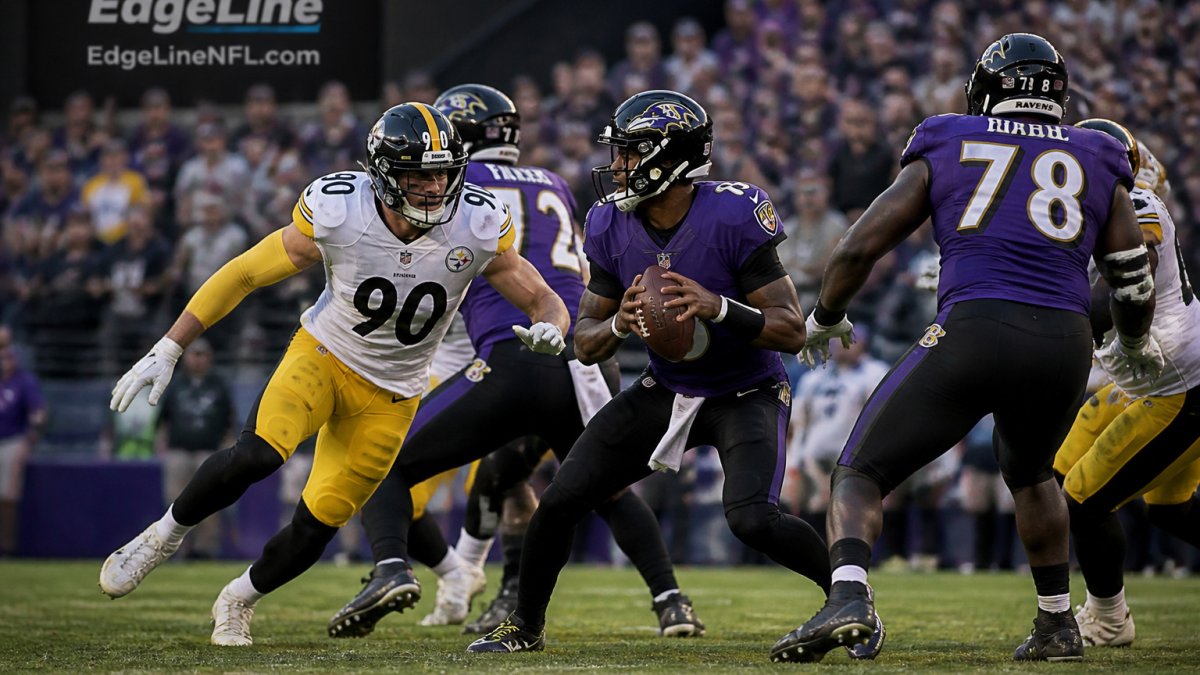
Many NFL models are trained on large samples of ordinary games, so they can learn general patterns that underperform in divisional matchups. Divisional games are different. Teams play each other twice a season, know each other's schemes, and adjust quickly. For a concrete example of how a division game is framed, see the Cleveland @ Pittsburgh matchup preview. The inputs that drive a projection can look ordinary on paper while the game itself plays out very differently.
That is the core problem. A model that does well on average can still misprice the game that departs most from average.
How Familiarity Distorts Model Inputs
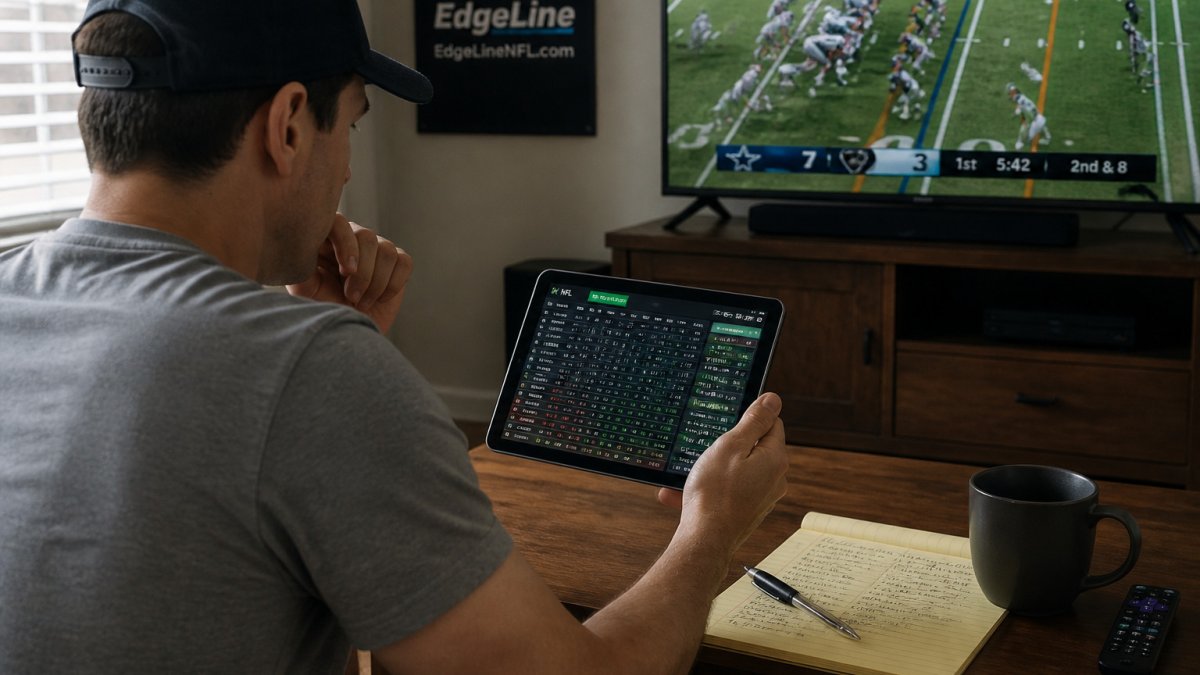
Most NFL models are built to answer a simple question: given everything we know about these two teams, what is the most likely outcome? You can see the full workflow for reviewing efficiency, turnovers and injuries before trusting any model input. The problem is that "everything we know" is usually a season-long average, and a divisional rematch is not an average game. Familiarity changes the inputs in ways a box score cannot see.
The mechanism: variance compression
That matters for models because most projections are calibrated on league-wide averages. If a model expects a certain number of explosive plays per game based on season-long efficiency, and the third meeting suppresses those plays, the model's fair line will be too high or too low depending on which side of the total it lands. The model is not wrong about the teams; it is wrong about the environment.
Why season-long efficiency numbers mislead in a third meeting
A team's yards-per-play or points-per-drive figures are averages across 17 games against 17 different opponents. In a divisional rematch, the opponent is not a random draw, it is the team that has spent two games learning how to take away what the offense does best. A defense that ranks middle-of-the-pack in pass efficiency may look ordinary on paper but play above that level against a familiar foe.
The reverse is also true. An offense that feasted on unfamiliar defenses early in the season may see its efficiency numbers drop in a third meeting, because the opposing coordinator has had two full game plans to study. A model that weights season-long efficiency heavily will overstate that offense's expected output.
A common trap is treating a team's season-long DVOA or EPA per play as a stable input for a divisional rematch. Those metrics are useful, but they describe an average opponent, not this opponent. Adjusting for familiarity is a judgment call, not a formula.
How models weight head-to-head data (and why it is tricky)
Some models include head-to-head history as a feature. Two meetings is a small sample. A model that gives heavy weight to two prior results can overreact to a single blowout or a single ugly loss that was driven by turnovers or injuries rather than scheme.
A more defensible approach is to treat head-to-head data as a directional signal, not a decisive input. Ask whether the prior meetings revealed a structural advantage, a pass-rush mismatch, a coverage tendency, a red-zone scheme, that is likely to persist. If the answer is yes, that is a real input. If the answer is "one team got lucky with turnovers," it is noise.
The familiarity bias gap competitors miss
Most betting content lists divisional trends without explaining why models fail to account for familiarity bias. A reasonable fix is not to throw out the model but to adjust the inputs, treating head-to-head history as one signal among many rather than a verdict.
The article points to a few concrete ways familiarity changes the inputs a model relies on.
| Input | Why it misleads in a third meeting | Suggested adjustment |
|---|---|---|
| Season-long efficiency | Averages across 17 different opponents | Treat as an average, not this opponent |
| Explosive plays per game | Suppressed by a familiar defense | Expect fewer big plays than the model assumes |
| Head-to-head history | Only two meetings, a small sample | Use as a directional signal only |
| Turnover-driven results | Often luck, not scheme | Separate noise from structural advantage |
NFL Divisional Betting Trends and What They Actually Show
Divisional betting trends are popular in the media, and they deserve a careful read. Historical records against the spread for divisional underdogs or favorites can look convincing, but a streak is not the same as a reliable edge. Small samples produce dramatic-looking numbers that regress toward the mean over time.
Trends are most useful as a starting question: why has this pattern appeared, and does the current matchup support it? Our guide on data-informed NFL matchup decisions explains how to pair injury metrics with market comparisons to separate real signal from noise. A trend that cannot be explained by something specific, like a coaching tendency or a defensive scheme, deserves skepticism.
Coaching Adjustments in Repeat Matchups
Coaches adjust after every meeting. That sentence is true and useless on its own. The useful question is: what specifically changes between the first meeting and the third, and how should a bettor translate those changes into a read on the line? Most betting content skips this step, which is why coaching adjustments remain one of the least-modeled variables in divisional handicapping.
What actually changes between meeting one and meeting three
In the first meeting, both staffs are working from offseason film and tendencies from the prior season. By the third meeting, each staff has two full game plans of evidence. The adjustments tend to cluster in a few areas:
- Personnel groupings. A coordinator who saw his base package gashed in Week 5 may shift to more nickel or dime in Week 16, changing the matchup math for both the run and pass game.
- Pressure rates and blitz timing. A defensive coordinator who blitzed heavily in the first meeting and got burned may dial back pressure in the third, or move it to different downs.
- Route concepts and motion. Offensive staffs often add motion or shift to different route combinations to create leverage against a coverage they have already seen.
- Red-zone and third-down scripting. These are the highest-leverage situational downs, and they are the ones coordinators study most closely between meetings.
None of these show up cleanly in a box score. A model that reads only yards and points will miss them entirely.
Why pure data models struggle here
A predictive model learns from outcomes. Coaching adjustments are inputs that change the outcome-generating process, not the outcome itself. If a coordinator shifts from man to zone coverage in the third meeting and the defense improves, the model sees a better defensive performance, but it has no feature that says "this staff changed its scheme because of what happened in the prior meeting." The adjustment is invisible to the model until after the game, and by then the line has already moved.
The practical implication: in a third meeting, the most valuable information is often qualitative, film study, coordinator tendencies, and reported scheme changes, not another column of season-long stats. That is a gap pure data models cannot close on their own.
A framework for reading coaching adjustments into the line
You do not need to be a film analyst to use this. A short, repeatable process works:
- Identify the biggest schematic failure from the prior meeting. Which unit got exploited, and why? Was it a coverage mismatch, a run-fit problem, or a protection issue?
- Check whether the staff has shown the ability to adjust. Some coordinators are known for self-scouting and changing tendencies; others are more static. This is a judgment call, not a stat.
- Look for reported or observable changes. Personnel moves, snap-count shifts, and depth-chart changes are public signals that a staff is adjusting.
- Compare the model's fair line to the live market. If the market has already priced in the adjustment and your model has not, the edge may be on the other side.
The gap competitors miss
Most divisional betting content lists historical ATS trends and stops there. The unique angle here is that coaching adjustments in a third meeting are a structural blind spot for models, and a place where a disciplined bettor can add context the number does not capture. That does not mean fading the model every time; it means knowing when the model is flying blind.
EdgeLine NFL tracks its picks transparently. Get the Edge! Subscribe Now at https://www.edgelinenfl.com.
Bet responsibly. Wagering involves risk, and no model guarantees a result.
Injury Recovery Versus Model Projections
Injuries create a second layer of uncertainty. A returning starter may be listed as active, but a model that uses his full-season numbers can overstate his impact if he is still knocking off rust or playing through a limitation.
The same applies in reverse. A backup who played well in a previous divisional meeting may not sustain that performance. Compare each player's recent snaps and role with the projection inputs, and check designations closely before trusting the number. Our guide to reading NFL injury reports for game previews walks through how designations and the weekly injury picture fit together.
Best Practices for NFL Divisional Betting
Use a short, repeatable process for every divisional game:
- Check the sample: how many meetings are there, and how much has changed since them?
- Review coaching changes, both coordinators and any scheme shifts.
- Confirm injury status and recent playing time, not just the final designation.
- Compare the model's fair line with the live market, and note how the line has moved.
- Record every pick with its line and date, so results can be reviewed later.
This is also where best practices for NFL divisional betting meet discipline: skip games where the edge is small or the uncertainty is high.
Reading Your Next Divisional Line With Clearer Eyes
A divisional line is not a verdict. It is a market price that reflects known information, and it may already include much of what a model would find. Our explainer on how NFL openers, current lines and key numbers move can help you read that price more clearly. The useful question is whether a meaningful gap exists between a fair projection and the number on the board, and whether that gap survives the uncertainties above.
EdgeLine NFL tracks its picks transparently, so you can judge the approach yourself. Get the Edge! Subscribe Now at https://www.edgelinenfl.com.
Bet responsibly. Wagering involves risk, and no model guarantees a result.
Frequently Asked Questions
Why are divisional games harder to predict in the NFL?
Divisional games are harder to predict because the two teams have played each other twice already, so the matchup is familiar to coaches, players and the betting market alike. Familiarity narrows the gap between the two sides' game plans, which often shrinks the edge a model finds from team ratings alone. Bettors should expect smaller projected margins and more reliance on situational factors like injuries, rest and coaching adjustments when handicapping these games.
Do betting models account for team familiarity in divisional games?
Many models use season-long team efficiency and do not weight prior head-to-head results heavily, so they can overstate how much a previous blowout predicts the rematch. Some models add a divisional adjustment, but the size of that adjustment is a judgment call. Check whether a model's projections are clearly labeled as fair-line estimates, and compare them against the live market before treating any gap as a real edge.
What are the best practices for NFL divisional betting?
Start by checking the current number against your own projection rather than relying on recent results. Track injury status and recovery timelines closely, since a returning player may not perform at his earlier level. Review how each coaching staff has adjusted in past meetings, and keep records of your own bets so you can judge whether your approach is working over a large sample. Always bet within a budget you can afford to lose.
